UGC NET Economics Coaching

UGC NET NTA Economics Coaching at Nishant Mehra Classes

Structured preparation, complete syllabus coverage, past year question discussions, and test series — built to guide you step by step, from fundamentals to advanced concepts, so you can approach the exam with confidence.

A complete recorded course for aspirants preparing for eligibility as Assistant Professors or seeking a Junior Research Fellowship (JRF) in Economics.

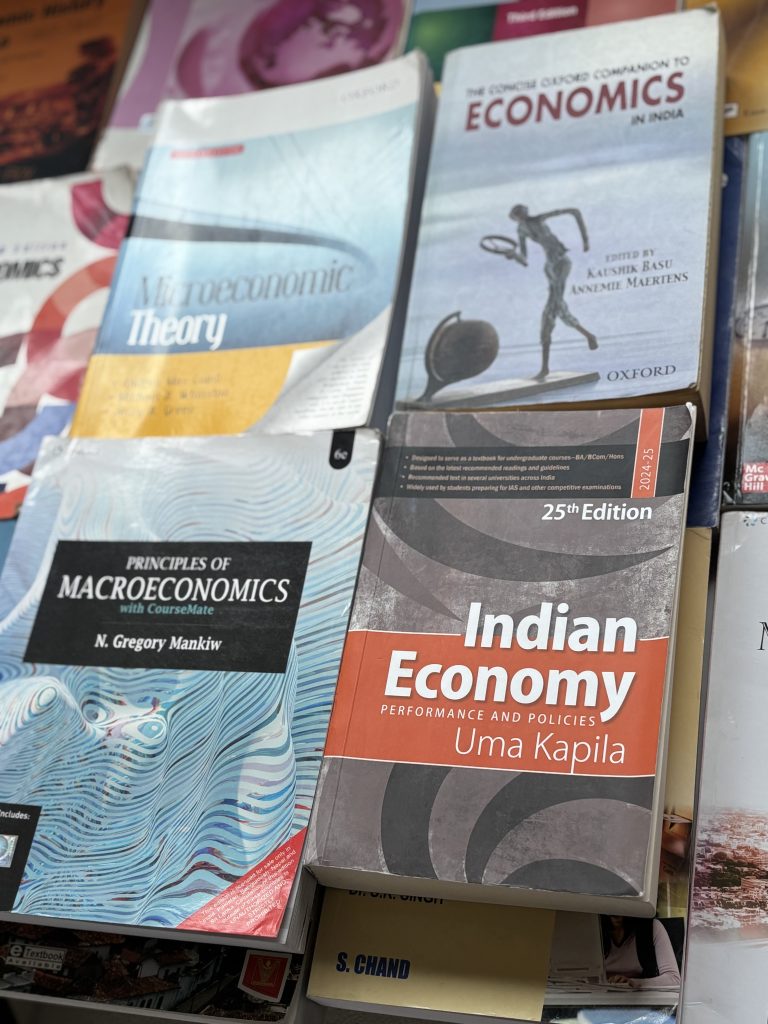
Economics reference books used in the UGC NET NTA Economics Coaching by Nishant Mehra ClassesRecorded Course · Self-Paced

Six-Months Access

Paper II · Economics

Overview

Course at a Glance

Fact Sheet

NTA · UGC NET Economics

Examination

UGC NET Economics, conducted by NTA

Mode

Fully online recorded course — self-paced

Access duration

Six months from the date of enrollment

Paper covered

Paper II (Economics) in required detail

Teaching approach

Concept clarity, PYQ discussions and quizzes

Study material

Topic-wise lectures with standard book references

Test series

Included with the course

Course fee

₹15,000

Contact

9999886629

The Examination

About UGC NET Economics

Student making notes while preparing for UGC NET EconomicsPostgraduate Standard

“The standard of the paper is equivalent to the postgraduate level (MA/MSc in Economics).”

Our UGC NET NTA Economics Coaching is designed for aspirants who want structured preparation, syllabus coverage, and test series. But, before we talk about our UGC NET NTA Economics Coaching, let us take a detailed look at the syllabus.

In the UGC NET examination conducted by NTA, the Economics Paper (Paper II) tests candidates on a wide range of topics, drawing from both microeconomic and macroeconomic theory as well as applied economics.

The standard of the paper is equivalent to the postgraduate level (MA/MSc in Economics) from an Indian university.

Success in UGC NET Economics requires a combination of thorough subject knowledge, clarity in presentation, and the ability to connect economic concepts with real-world scenarios, especially in the Indian context.

Candidates are expected to

  • Demonstrate strong conceptual clarity and theoretical depth
  • Support answers with relevant data, empirical examples, and applied reasoning
  • Show familiarity with key policy developments, government schemes, and current issues in the Indian economy
  • Solve questions with analytical precision, including interpretation of graphs, tables, and statistical findings where required

Exam Pattern

Exam Pattern: UGC NET Economics

The UGC NET Economics examination is conducted in Computer Based Test (CBT) mode by the National Testing Agency (NTA) — two papers, held in a single session of 3 hours without any break, both objective-type multiple-choice questions.

Paper I — General Teaching and Research Aptitude

50 Questions100 Marks1 Hour

This paper is common for all subjects and tests the overall teaching and research aptitude of candidates — reasoning ability and logical thinking, reading comprehension and verbal ability, data interpretation and mathematical reasoning, ICT awareness, teaching aptitude and classroom communication, research methodology and higher education system in India. Paper I is not subject-specific but plays a crucial role, as scoring well here can give candidates a competitive edge.

Paper II — Economics (Subject-Specific)

100 Questions200 Marks2 Hours

This paper is entirely subject-focused and tests the candidate’s depth of knowledge in Economics at the postgraduate level (MA/MSc standard) — Microeconomics, Macroeconomics, Statistics, Econometrics, Mathematical Economics, Public Finance, International Economics, Growth and Development, Environmental Economics, and Indian Economy. All questions are multiple-choice with a single correct answer. This paper carries twice the weightage of Paper I, and hence performance here largely determines success in qualifying NET or JRF.

Key Features of the Exam Pattern

  • Mode: Online (CBT – Computer Based Test), both papers in a single session of 3 hours without any break
  • Total Questions: 150 (50 + 100) · Total Marks: 300 (100 + 200)
  • Marking Scheme: +2 marks for each correct answer; no negative marking for incorrect or unattempted questions (do check the current year’s notification)
  • Since there is no negative marking, candidates are encouraged to attempt all questions
  • The combined performance in both papers determines whether the candidate qualifies for NET (Assistant Professor eligibility) or NET + JRF (Junior Research Fellowship), depending on cut-offs

Syllabus

Syllabus of UGC NTA NET Economics

The syllabus includes Microeconomics and Macroeconomics, Development and Planning, Public Finance, International Economics, Money and Banking, Environmental Economics, Indian Economy, Statistical and Mathematical Methods, and Growth and Development with special emphasis on India.

I

Microeconomics

  • Theory of Consumer Behaviour
  • Theory of Production and Costs
  • Decision-making under Uncertainty, Attitude towards Risk
  • Game Theory: Non-Cooperative Games
  • Market Structures: Competitive and Non-Competitive Equilibria and their Efficiency Properties
  • Factor Pricing
  • General Equilibrium Analysis
  • Efficiency Criteria: Pareto Optimality, Kaldor-Hicks, and Wealth Maximization
  • Welfare Economics: Fundamental Theorems, Social Welfare Function
  • Asymmetric Information: Adverse Selection and Moral Hazard

Companion Texts

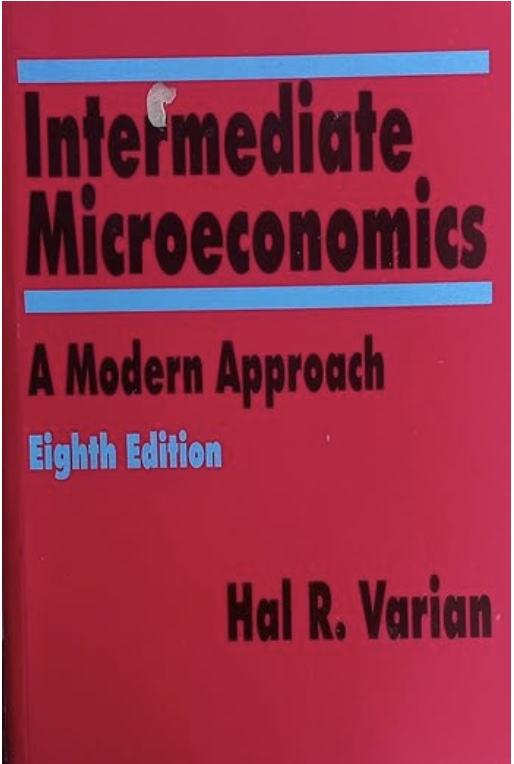
Intermediate Microeconomics by Hal R. Varian
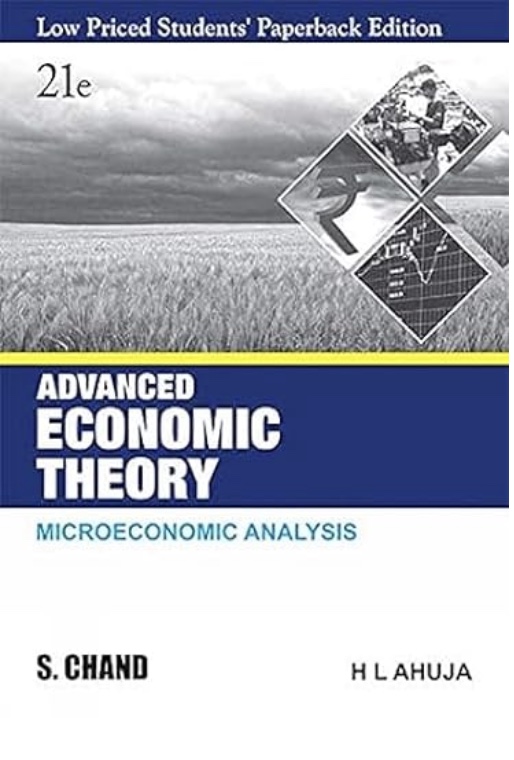
Advanced Economic Theory by H.L. Ahuja
II

Macroeconomics

  • National Income: Concepts and Measurement
  • Determination of Output and Employment: Classical and Keynesian Approaches
  • Consumption Function
  • Investment Function
  • Multiplier and Accelerator
  • Demand for Money
  • Supply of Money
  • IS-LM Model
  • Inflation and Phillips Curve Analysis
  • Business Cycles
  • Monetary and Fiscal Policy
  • Rational Expectations Hypothesis and its Critique

Companion Texts

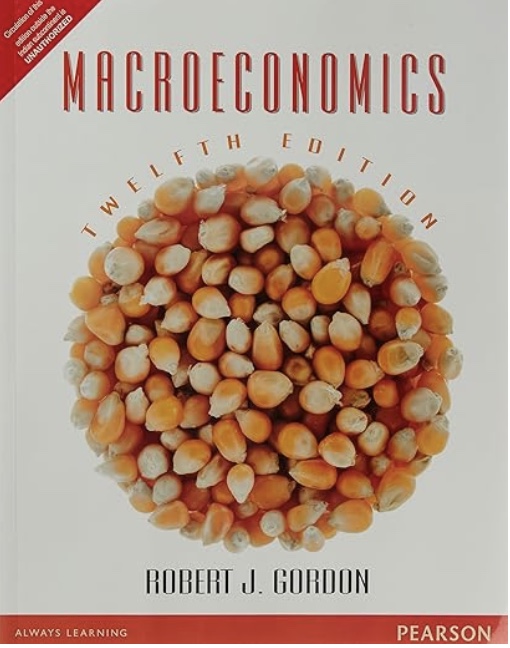
Macroeconomics by Dornbusch, Fischer and Startz
III

Statistics and Econometrics

  • Probability Theory: Concepts, Distributions, Moments, Central Limit Theorem
  • Descriptive Statistics: Measures of Central Tendency and Dispersion, Correlation, Index Numbers
  • Sampling Methods and Sampling Distributions
  • Statistical Inference and Hypothesis Testing
  • Linear Regression Models and their Properties (BLUE)
  • Identification Problem in Econometrics
  • Simultaneous Equation Models: Recursive and Non-Recursive
  • Discrete Choice Models
  • Time Series Analysis

Companion Texts

Basic Econometrics by Damodar N. Gujarati
IV

Mathematical Economics

  • Sets, Functions, Continuity, Sequences, Series
  • Differential Calculus and its Applications
  • Linear Algebra: Matrices and Vector Spaces
  • Static Optimization Problems and Applications
  • Input-Output Models and Linear Programming
  • Difference and Differential Equations with Applications

Companion Texts

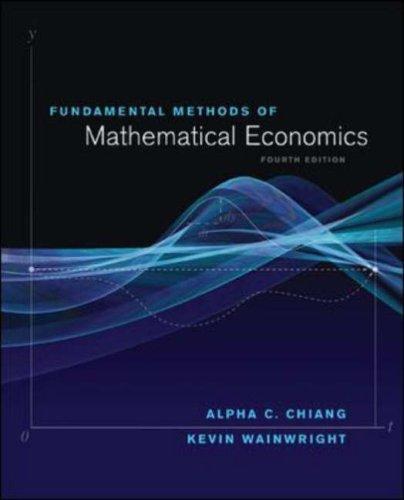
Fundamental Methods of Mathematical Economics by Alpha C. Chiang and Kevin Wainwright
V

International Economics

  • Basic Concepts and Analytical Tools of International Trade
  • Theories of International Trade
  • Trade under Imperfect Competition
  • Balance of Payments: Composition, Equilibrium, Disequilibrium, and Adjustment Mechanisms
  • Exchange Rates: Concepts and Theories
  • Foreign Exchange Market and Arbitrage
  • Gains from Trade, Terms of Trade, and Trade Multiplier
  • Tariff and Non-Tariff Barriers, Dumping
  • GATT, WTO, and Regional Trade Blocs
  • Trade Policy Issues
  • IMF and World Bank

Companion Texts

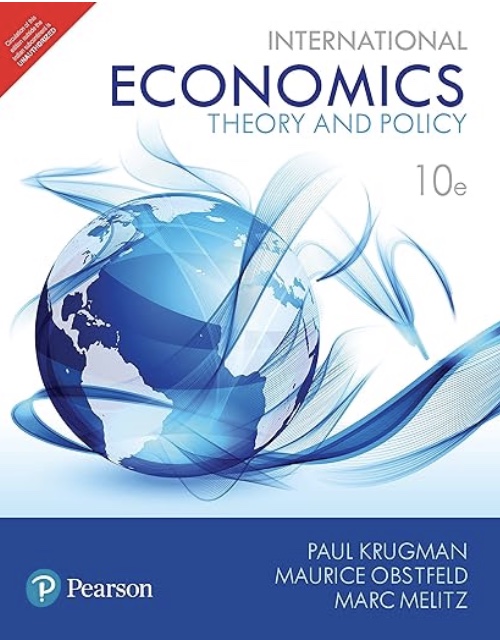
International Economics by Krugman and Obstfeld
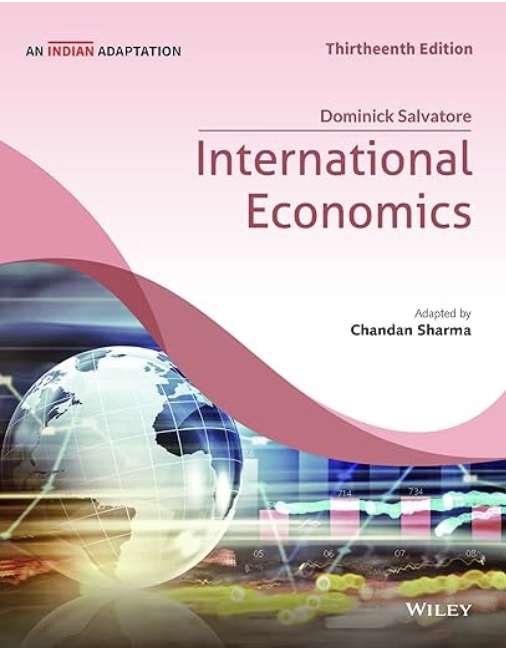
International Economics by Dominick Salvatore
VI

Public Economics

  • Market Failure and Remedies: Asymmetric Information, Public Goods, Externalities
  • Regulation of Markets: Collusion and Consumer Welfare
  • Public Revenue: Tax and Non-Tax, Direct and Indirect Taxes, Progressive and Non-Progressive Taxation, Incidence and Effects
  • Public Expenditure
  • Public Debt and its Management
  • Public Budget and Budget Multiplier
  • Fiscal Policy and its Implications

Companion Texts

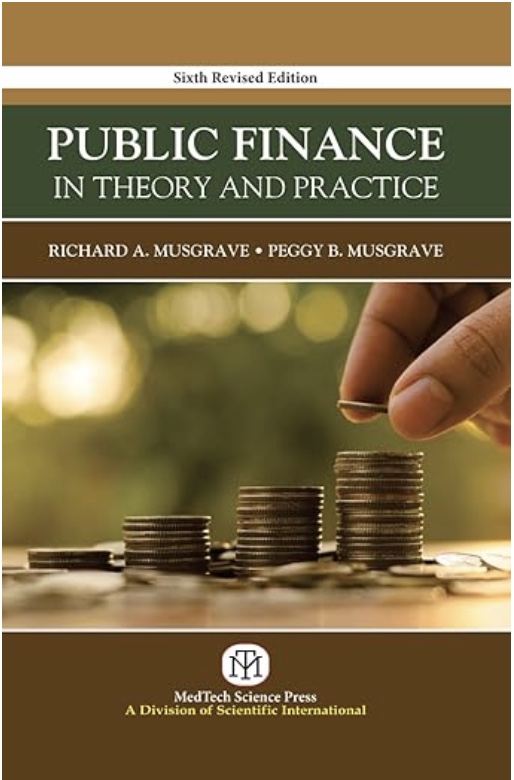
Public Finance in Theory and Practice by Musgrave and Musgrave
VII

Money and Banking

  • Components of Money Supply
  • Central Banking
  • Commercial Banking
  • Instruments and Working of Monetary Policy
  • Non-Banking Financial Institutions
  • Capital Markets and their Regulation

Companion Texts

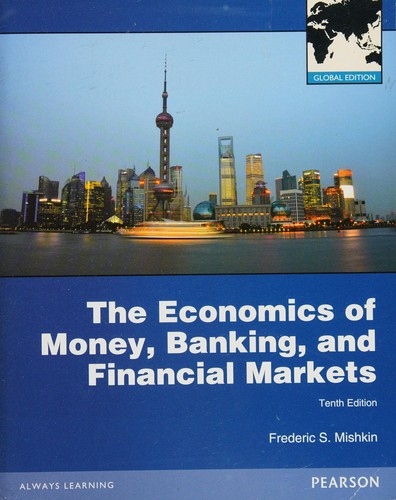
The Economics of Money, Banking and Financial Markets by Frederic S. Mishkin
VIII

Growth and Development Economics

  • Economic Growth vs Economic Development
  • Theories of Economic Development: Smith, Ricardo, Marx, Schumpeter, Rostow, Balanced and Unbalanced Growth, Big Push
  • Models of Economic Growth: Harrod-Domar, Solow, Robinson, Kaldor
  • Technical Progress: Embodied and Disembodied, Endogenous Growth
  • Indicators of Development: PQLI, HDI, SDGs
  • Poverty and Inequality: Concepts and Measurement
  • Social Sector Development: Health, Education, Gender

Companion Texts

Economics of Development by A.P. Thirlwall
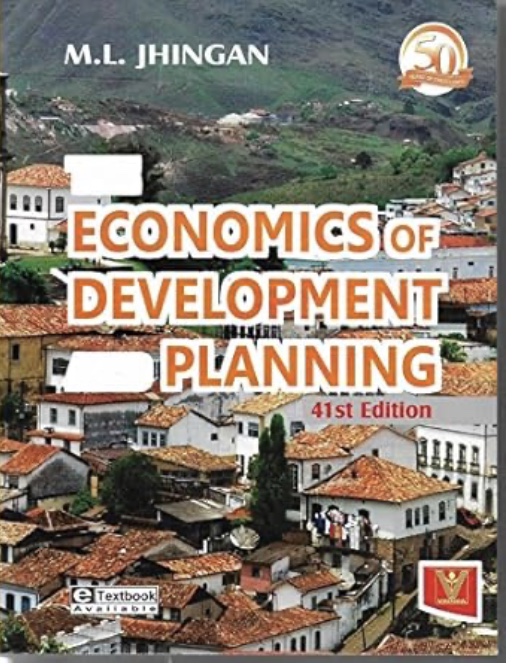
Economics of Development and Planning by M.L. Jhingan
IX

Environmental Economics and Demography

  • Environment as a Public Good
  • Market Failure and Environmental Externalities
  • Coase Theorem
  • Cost-Benefit Analysis and Compensation Criteria
  • Valuation of Environmental Goods
  • Theories of Population
  • Fertility, Mortality, Morbidity: Concepts and Measures
  • Age Structure and Demographic Dividend
  • Life Tables
  • Migration

Companion Texts

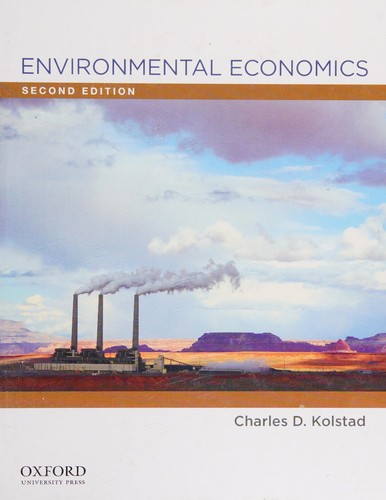
Environmental Economics by Charles D. Kolstad
X

Indian Economy

  • Economic Growth in India: Trends and Structure
  • Agriculture, Industry and Services Sector: Growth Pattern, Major Challenges, and Policy Responses
  • Rural and Urban Development: Issues, Challenges, and Policy Responses
  • Foreign Trade: Structure, Direction, Balance of Payments, Foreign Capital Inflows, and Trade Policies
  • Infrastructure: Physical and Social Infrastructure, Public-Private Partnerships
  • Reforms in Land, Labour, and Capital Markets
  • Centre-State Financial Relations, Finance Commissions of India, FRBM Act
  • Poverty, Inequality, and Unemployment in India

Companion Texts

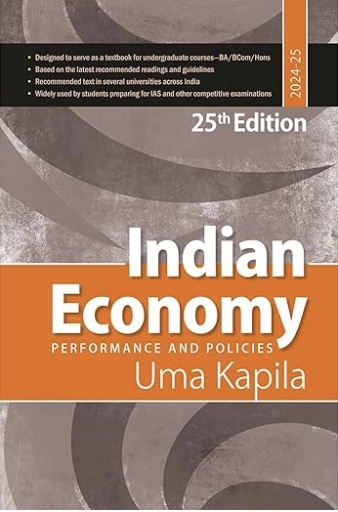
Indian Economy: Performance and Policies by Uma Kapila

Official syllabus of UGC NET Economics Exam : Click here|June 2025 Question Paper of UGC NET Economics Exam : Click here

Strategy

Unit-Wise Weightage in UGC NET Economics

While the NTA does not release an official unit-wise distribution of marks, analysis of previous year papers shows a clear trend in the type of questions asked.

High Priority

~40–45% of questions

of Paper II

Microeconomics, Macroeconomics and Indian Economy

These three units usually form the backbone of Paper II, contributing the maximum number of questions. Expect questions from consumer theory, production & cost, game theory, market structures and welfare economics; IS-LM, AD-AS, Phillips Curve, inflation, monetary & fiscal policies; and agriculture, industry, services, poverty, inequality, unemployment, infrastructure, FRBM and Finance Commission. Recent Economic Survey and Union Budget references are highly valuable here. Devote maximum preparation time to these areas, and revise them multiple times with PYQs.

Practice-Heavy Units

10–15 questions

of Paper II

Econometrics and Mathematical Economics

Regression models, hypothesis testing, identification problem, time series, and discrete choice models are common; optimization problems, differential calculus, linear algebra, and input-output analysis appear frequently. Many students skip these due to technical complexity, but with practice, these can become scoring areas.

Medium Priority

~40–45% of questions

of Paper II

Public Economics, Money & Banking, Growth & Development

Market failure, taxation, public debt, and fiscal policy are regular areas — know both theory and Indian applications (GST, subsidies, fiscal deficit trends). Central banking functions, monetary policy tools, NBFCs, and capital markets link with the Indian context. Classic theories (Rostow, Lewis, Schumpeter), Harrod–Domar, Solow model, and concepts like HDI, SDGs, inequality and poverty bring both conceptual and applied questions.

Low Weightage, High ROI

~10–15% of questions

of Paper II

Environmental Economics and Demography

These topics usually account for fewer questions, but the level is straightforward compared to other technical sections — Coase theorem, externalities, valuation methods, cost-benefit analysis; fertility, mortality, migration, and demographic dividend. Prepare these well in less time — they are quick to revise and can fetch easy marks, boosting overall score.

Reading List

Best Books for UGC NET Economics — Topic Wise

Advanced Economic Theory by H.L. Ahuja
1

Microeconomics

H.L. Ahuja — Advanced Economic Theory: Microeconomic Analysis (most popular in India, covers consumer theory, production, market structures, and welfare in depth); Hal R. Varian — Intermediate Microeconomics: A Modern Approach (clear explanations with mathematical approach, excellent for game theory and efficiency analysis).

Macroeconomics by Dornbusch, Fischer and Startz
2

Macroeconomics

Rudiger Dornbusch, Stanley Fischer & Richard Startz — Macroeconomics (standard PG-level text, detailed on IS–LM, AD–AS, inflation, and policies); N. Gregory Mankiw — Macroeconomics (easier to grasp, builds strong basics before moving to advanced models).

Basic Econometrics by Damodar N. Gujarati
3

Statistics & Econometrics

Damodar N. Gujarati — Basic Econometrics (beginner-friendly, explains regression, hypothesis testing, and econometric issues clearly); Jeffrey M. Wooldridge — Introductory Econometrics: A Modern Approach (deeper coverage of time series, panel data, and applied econometrics).

Fundamental Methods of Mathematical Economics by Alpha C. Chiang and Kevin Wainwright
4

Mathematical Economics

Alpha C. Chiang & Kevin Wainwright — Fundamental Methods of Mathematical Economics (one-stop book for optimization, calculus, linear algebra, and input-output models, sufficient for NET level).

International Economics by Dominick Salvatore
5

International Economics

Dominick Salvatore — International Economics: Trade and Finance (exam-friendly, good for theory plus numericals on trade, BOP, tariffs, WTO); Paul Krugman & Maurice Obstfeld — International Economics: Theory and Policy (stronger on trade policy and globalization aspects).

Public Finance in Theory and Practice by Musgrave and Musgrave
6

Public Economics / Public Finance

Richard A. Musgrave & Peggy B. Musgrave — Public Finance in Theory and Practice (classic text, best for taxation, public expenditure, fiscal policy, and debt).

The Economics of Money, Banking and Financial Markets by Frederic S. Mishkin
7

Money & Banking

S.B. Gupta — Monetary Economics: Institutions, Theory and Policy (Indian-oriented, covers money supply, central banking, and RBI policy); Frederic S. Mishkin — The Economics of Money, Banking and Financial Markets (global perspective, connects theory with modern financial systems).

Economics of Development by A.P. Thirlwall
8

Growth & Development Economics

Michael Todaro & Stephen Smith — Economic Development (widely used, explains growth theories, poverty, inequality, and development strategies simply); A.P. Thirlwall — Growth and Development (strong focus on analytical models like Harrod–Domar and Solow).

Environmental Economics by Charles D. Kolstad
9

Environmental Economics & Demography

Charles D. Kolstad — Environmental Economics (concise and clear, covers externalities, valuation, Coase theorem, and policy); H.L. Ahuja — Environmental Economics and Natural Resource Management (Indian author, connects environmental economics with Indian examples).

Indian Economy: Performance and Policies by Uma Kapila
10

Indian Economy

Uma Kapila (ed.) — Indian Economy: Performance and Policies (updated yearly, reliable for reforms, agriculture, industry, services, and policies); Government of India — Economic Survey & Union Budget (must-read for data, schemes, and current issues, directly useful in exam answers).

Careers

Career Scope after UGC NET Economics

In short, UGC NET Economics is not just an exam you pass and forget. It gives you real options — whether you want to go into teaching, research, policy-making, or consulting.

Assistant Professor

Clearing UGC NET in Economics can completely change the direction of your career. The most obvious path is becoming an Assistant Professor, since NET makes you eligible for teaching jobs in universities and colleges across the country. With the growing focus on higher education under NEP 2020, there’s a real demand for good teachers in economics. Apart from a stable salary that often starts around ₹50,000 and can go much higher in central universities, teaching also gives you the satisfaction of shaping young minds, doing research, and publishing your own academic work.

Junior Research Fellowship (JRF)

If you qualify for the Junior Research Fellowship (JRF), the opportunities are even bigger. JRF is basically a funded route into a PhD. You get a monthly fellowship of about ₹37,000–₹42,000 (plus HRA) in the first two years, which later increases. This allows you to focus fully on research without worrying about finances. Many students who take this path end up as professors, researchers in big institutions, or even advisors in government and international projects.

Research Career Track

There’s also a strong research career track outside of teaching. Institutions like the Reserve Bank of India, NITI Aayog, ICRIER, ISI, and various think-tanks regularly hire economists for research work. These roles involve analysing the economy, writing policy papers, and suggesting reforms. If you’re aiming beyond India, bodies like the World Bank, IMF, UNDP, or Asian Development Bank value the combination of UGC NET plus a PhD very highly.

Consulting and Policy Analysis

Another route is moving into consulting and policy analysis. Here, economists work with consulting firms such as Deloitte, EY, PwC, or in research foundations, advising governments and corporates on policies, markets, and development projects. These jobs combine economics with real-world problem solving, and they often come with international exposure.

Government and Beyond

Beyond this, clearing NET can also open doors in government departments and ministries that deal with areas like trade, labour, finance, and planning. Many people also use the qualification to move into content creation, EdTech, or writing, where they share their knowledge with a wider audience.

For You

Who This Course Is For

This course is meant for aspirants of the UGC NET Economics exam, conducted by NTA, who are preparing for eligibility as Assistant Professors or seeking a Junior Research Fellowship (JRF) in Economics.

Postgraduate students in Economics

Postgraduate students in Economics looking for a structured, topic-wise preparation for the UGC NET Economics exam, conducted by NTA.

Research aspirants

Research aspirants aiming to qualify for JRF and academic careers — Assistant Professorships and funded PhD routes.

Working professionals

Working professionals seeking a flexible, recorded course they can follow at their own pace, alongside college or job commitments.

What the Course Covers

The course provides full coverage of the UGC NET Economics syllabus. Each unit is taught topic-by-topic, with conceptual explanations, previous year question discussions, and key reference guidance.

Microeconomics and MacroeconomicsDevelopment and GrowthIndian EconomyInternational EconomicsPublic Finance and Money & BankingEnvironmental Economics and DemographyMathematical Economics, Statistics, and Econometrics

Inside the Course

Why Choose Our UGC NET NTA Economics Coaching?

With our UGC NET NTA Economics Coaching, students get recorded classes, past year question discussions, and test series. This makes preparation systematic and exam-oriented.

Complete recorded course

Watch anytime, from anywhere — fully online and entirely self-paced for flexible learning. No live classes.

Six-months access

Six-months access from the date of enrollment, accessible anytime within that period.

Systematic, unit-wise approach

Aligned with the official UGC NET syllabus, with conceptual explanations, previous year question discussions, and key reference guidance.

Past year question discussions

Emphasis on concept clarity, answer patterns, and previous year trends, with integrated question discussions in each unit.

Test series included

Students get recorded classes, past year question discussions, and test series — making preparation systematic and exam-oriented.

Coaching philosophy

This is not a crash course or shortcut. It is designed to help you build a strong foundation in each topic, connect theory with application, and prepare with discipline and structure, even while studying independently.

Fees

Course Fee and How to Enrol

One simple, complete package — no confusing options.

Complete Course

UGC NET Economics Recorded Course

₹15,000

Complete recorded course covering Paper II (Economics) in required detail — topic-wise lectures, past year question discussions, and test series. Access for six months from the date of enrollment.

To enrol, email your interest to nishantmehra01@gmail.com — you’ll receive access instructions and payment details. Once payment is confirmed, course access will be granted for six months.

FAQ

Frequently Asked Questions About UGC NET Economics

A Final Word

UGC NET Economics Coaching

Our UGC NET NTA Economics Coaching is built to guide you step by step, from fundamentals to advanced concepts, so you can approach the exam with confidence.

Build a strong foundation in each topic, understand how to connect theory with application, and prepare with discipline and structure — and gain confidence in attempting both conceptual and application-based questions.

Nishant Mehra

Nishant Mehra Classes